For years, interior design prescribed a strict rule: all metals in a space must match perfectly. Break this rule, and risk a chaotic, uncoordinated look. However, as design evolves, so too do the guidelines. Today, embracing “Mixing Metals: Brass and Chrome Light Fixtures” is not just acceptable, it’s a sophisticated trend that breathes depth, character, and a uniquely curated feel into any home. Forget the fear of clashing; instead, discover how to artfully combine the radiant warmth of brass with the sleek coolness of chrome to create dynamic and truly personalized interiors.
This guide will demystify the art of mixing metals, focusing specifically on brass and chrome light fixtures. We’ll explore the unique appeal of each metal, delve into the fundamental design principles that ensure harmony, and provide practical steps to confidently integrate these contrasting finishes into your living spaces. Get ready to transform your home with a stylish, layered aesthetic that feels both intentional and effortlessly chic.
The Allure of Brass and Chrome: Understanding Each Metal
Before you begin blending, it’s essential to understand the individual characteristics and inherent charm of both brass and chrome. These two metals, while distinct, offer compelling qualities that make them ideal partners in a mixed-metal palette.
Brass: This warm, inviting alloy, composed primarily of copper and zinc, instantly infuses a space with a sense of history, luxury, and coziness. Its golden hue can range from bright, polished gold to subtle, brushed matte, or even a rich, antique patina that evokes timeless elegance. Brass light fixtures can anchor a room with their substantial presence, adding a touch of vintage charm or refined opulence depending on their finish and design.
Chrome: In stark contrast, chrome is a cool-toned metal, renowned for its highly reflective, mirror-like finish and sleek, contemporary appeal. Polished chrome brings a crisp, bright energy to a room, effectively reflecting light and visually expanding smaller spaces. Its clean lines and modern aesthetic make it a versatile choice for a wide range of styles, from minimalist to industrial. When used in light fixtures, chrome provides a sharp, sparkling focal point that can feel refreshingly modern.
The inherent beauty of mixing brass and chrome lies in this dynamic warm-meets-cool interplay. Brass provides a grounding warmth, while chrome offers a luminous, polished counterpoint. This contrast prevents a room from feeling monotonous or overly matched, fostering a more sophisticated and layered environment.
Key Considerations for Mixing Brass and Chrome Light Fixtures
Successfully blending brass and chrome light fixtures goes beyond simply placing them in the same room. It requires thoughtful consideration of several key design principles to ensure a cohesive and visually pleasing result.
The fundamental aspect of mixing these metals lies in acknowledging their distinct tones. Brass, with its golden glow, is undeniably warm, while chrome, with its silvery sheen, is cool. A successful mix often leverages this inherent warm-cool contrast to create visual interest and balance without overwhelming the senses.
Limiting Your Palette is crucial for preventing a jumbled appearance. While the idea is to mix, too many different metals can lead to a chaotic result. For brass and chrome, it’s generally recommended to stick to a maximum of two or three different metal finishes within a single room. If you introduce a third, consider a neutral like matte black or a subtle brushed nickel that can bridge the gap between the dominant warm and cool tones without competing.
When selecting your metals, decide on a Dominant vs. Accent approach. Choose one metal to be the prevailing finish in the space, typically making up about 70% of the metallic elements. The other metal then serves as the accent, comprising the remaining 30%. For example, a room might feature predominantly chrome light fixtures and hardware, with carefully placed brass accents like a statement pendant or decorative objects, or vice versa. This ratio ensures that the room feels balanced and intentional, rather than accidental.
Finally, consider the Room Style and Functionality. The choice and proportion of brass and chrome should align with the overall aesthetic you wish to achieve. A modern or minimalist space might lean heavily on chrome with subtle brass accents for warmth, while a more transitional or eclectic design could give equal weight to both, allowing each to shine. In high-traffic or utilitarian areas like kitchens and bathrooms, chrome’s durability and easy maintenance often make it a practical dominant choice, with brass introduced through decorative lighting or hardware.
Brass vs. Chrome Light Fixtures: A Quick Comparison
|
Our Picks for the Best Living room ceiling light in 2026
As an Amazon Associate I earn from qualifying purchases.
|
||
| Num | Product | Action |
|---|---|---|
| 1 | Modern LED Ceiling Light for Bedroom 31.5" Black Kitchen Lighting Fixtures Ceiling 3000-6500K Dimmable Square Ceiling Light with Remote Control for Living Room, Dining Room, Kitchen |

|
| 2 | Modern Ceiling Light, 36.2'' LED Dimmable Acrylic Square 6+1 Rings Ceiling Lights with Remote, Black Flush Mount Ceiling Light Fixture for Low Ceiling Bedroom Living Room Dining Room, 130W |
|
| 3 | 36W Modern LED Ceiling Light Fixture, 19.7Inch Curved Wave Ceiling Lamp with Remote for Bedroom, Kitchen, Hallway, Foyer Library Dining Room Silver 6000K Modern Ceiling Light Fixture |
|
| 4 | Shine LUEST Modern LED Ceiling Light Fixture Black Kitchen Lighting Fixtures Ceiling for Bedroom 31.5" Dimmable 6 Ring Square Ceiling Light for Kitchen with Remote Control for Living Room,Dining Room |
|
| 5 | RUIYEY Modern Chandelier Ceiling Light Fixture Sputnik Chandeliers Gold and Black Farmhouse Chandelier Over Table 12-Light Height Adjustable Chandeliers for Dining Room, Living Room,Kitchen Island |
|
| 6 | 33" Modern Chandelier Ceiling Light Fixture, 12-Light Sputnik Chandeliers Brushed Gold and Black Mid Century Chandelier Over Table, Height Adjustable Chandeliers for Dining Room Living Room Kitchen |
|
| 7 | Shine LUEST Modern LED Ceiling Light, Dimmable LED Chandelier Flush Mount Ceiling Lights, Remote Control Acrylic Ring Ceiling Lamp Fixture for Living Room Dining Room Bedroom (White, 8 Rings) |
|
| 8 | Amico 24 Pack 6 Inch 5CCT Ultra-Thin LED Recessed Ceiling Light with Junction Box, 1050LM Brightness, Dimmable Canless Wafer Downlight, 12W, ETL&FCC |
|
| 9 | Modern LED Ceiling Light 7 Rings Dimmable Fixtures with Remote Black Close to Ceiling Light 31.8" 130W 3000K-6500K Flush Mount Ceiling Lamp for Living Room,Bedroom,Kitchen |
|
| 10 | MEIXISUE Gold Modern Sputnik Chandelier Ceiling Light Fixtures,6-Lights Industrial Metal Semi Flush Mount Ceiling Light for Bedroom Dining Room Living Room Kitchen Hallway UL Listed |
|
| Feature | Brass Light Fixtures | Chrome Light Fixtures |
|---|---|---|
| Tone | Warm, golden, rich | Cool, silvery, bright |
| Aesthetic | Classic, vintage, elegant, luxurious, traditional | Modern, sleek, contemporary, minimalist |
| Common Finishes | Polished, brushed, antique, satin, aged | Polished, brushed |
| Best Paired With | Cool tones (chrome, nickel, stainless steel), earthy palettes, dark woods | Warm tones (brass, gold), black, white, glass, stone |
| Impact | Adds richness, coziness, historical depth, warmth | Adds sparkle, crispness, expands visual space, lightness |
| Maintenance | Can show fingerprints, may tarnish (patina) over time, requires specific cleaning depending on finish | Easy to clean, resistant to tarnish, durable, maintains shine easily |
Practical Steps for Harmonizing Mixed Metal Fixtures
Once you understand the fundamental principles, implementing mixed metals into your design becomes a tangible and exciting process. Thoughtful execution ensures that your brass and chrome light fixtures complement each other seamlessly.
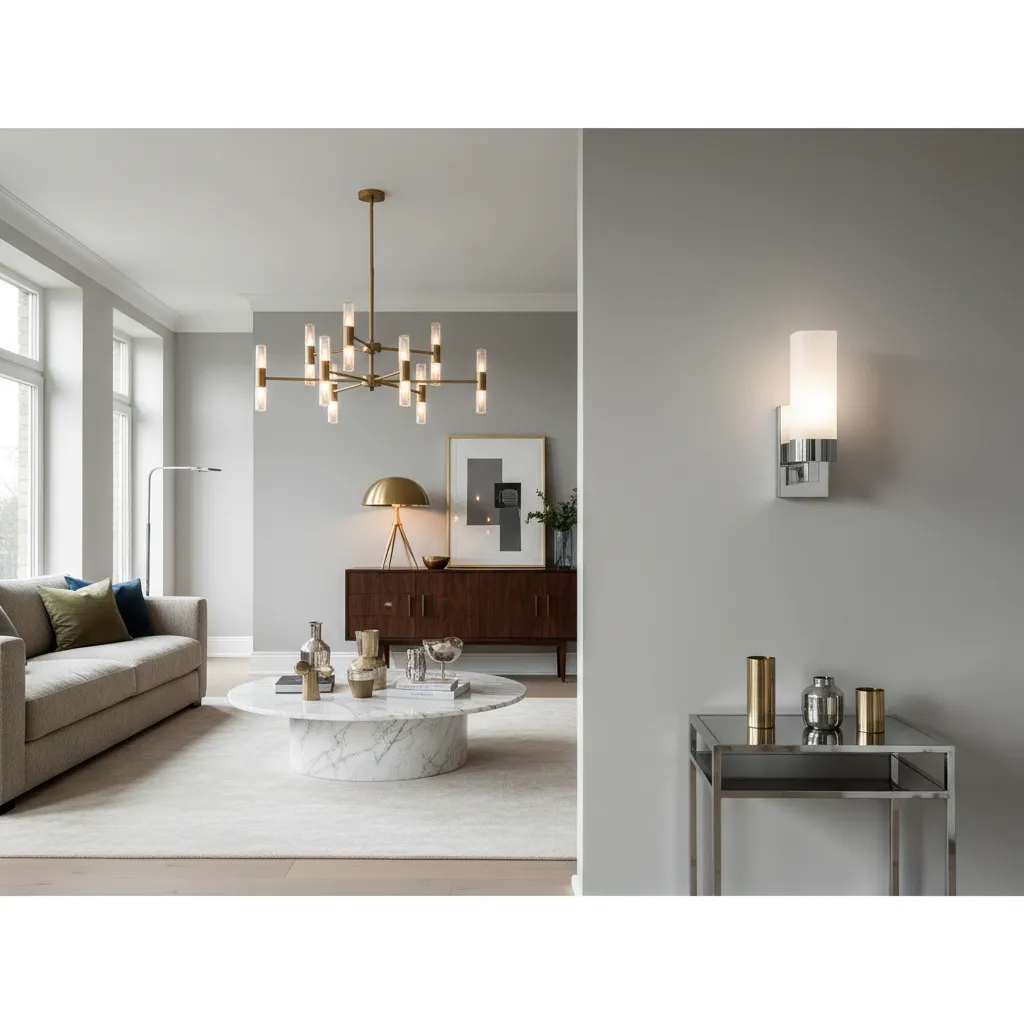
Strategic Placement and Distribution are paramount. Avoid clustering all of one metal in a single area. Instead, spread your chosen metals evenly throughout the room to create a cohesive flow and encourage the eye to move around the space. Consider separating metals by height: perhaps a stunning brass chandelier hangs overhead, while sleek chrome sconces adorn a feature wall at eye level. This layering adds visual interest and prevents any single metal from dominating too heavily.
Achieving Cohesion Through Repetition is another vital technique. For a mixed-metal scheme to feel intentional, each metal should appear in at least two different places within the room. For instance, if your overhead lighting is brass, incorporate brass in other smaller elements like picture frames, decorative accents, or the base of a table lamp. Similarly, if you have chrome cabinet pulls, ensure chrome light fixtures or a chrome-framed mirror are also present. This repetition creates a subtle rhythm and sense of unity, making the mix feel deliberate rather than random.
Playing with Finishes (Sheen) offers another layer of sophistication. While mixing brass and chrome already provides a strong contrast in tone, you can further enhance this by considering the finish. Combining polished brass with brushed chrome, or vice versa, adds textural intrigue. The key is to ensure that the finishes complement each other and align with the overall aesthetic. While you can mix different finishes, aim for consistency within certain item groupings. For example, all sconces in a bathroom should typically share the same finish, even if they differ from the main ceiling fixture. Avoid mixing finishes that are too similar, such as a highly polished brass directly next to a satin brass, as they can sometimes look like a mistake rather than an intentional contrast.
Consider Bridge Elements to effortlessly tie your mixed metals together. Some light fixtures are designed with mixed metals, featuring both brass and chrome components, serving as an inherent bridge. Alternatively, decorative elements like a piece of art with both metallic tones, a mirror with a mixed-metal frame, or furniture with subtle metallic accents can act as visual connectors, weaving the different finishes into a unified design tapestry.
Finally, remember to consider Other Elements in the room. How do your mixed metals interact with your furniture, textiles, and wall colors? A neutral backdrop often allows mixed metals to shine brightest without clashing. Warm-toned furniture or fabrics can enhance the warmth of brass, while cool-toned elements can highlight the sleekness of chrome. The goal is to create a harmonious environment where all components, including your brass and chrome light fixtures, feel like part of a carefully curated collection.
Inspiring Combinations: Brass and Chrome in Real-World Designs
The beauty of mixing brass and chrome light fixtures lies in their versatility, allowing them to adapt to various design styles and create impactful statements. Seeing how these metals can be harmonized in practical scenarios provides invaluable inspiration.
In Modern Minimalism, where clean lines and uncluttered spaces prevail, brass light fixtures can introduce a much-needed touch of warmth and personality without sacrificing the minimalist aesthetic. Imagine sleek, chrome track lighting providing ambient illumination, complemented by a single, geometric brass pendant over a dining nook, offering a soft glow and a hint of luxurious detail. This strategic use of brass prevents the space from feeling cold or sterile, adding an inviting layer.
For Transitional Elegance, a style that balances classic and contemporary elements, brass and chrome are natural partners. Picture a living room featuring a grand, traditional polished brass chandelier as the central focal point, beautifully contrasted by modern, polished chrome picture lights illuminating artwork on the walls. This combination marries timeless grandeur with fresh, crisp accents, creating a sophisticated and balanced ambiance that feels both classic and current.
Industrial Chic designs often benefit from the robust contrast these metals offer. Here, sturdy chrome cage lights might define a task area, while vintage-inspired brushed brass sconces with visible Edison bulbs add a raw, authentic warmth to exposed brick or concrete walls. The interplay of chrome’s hardness and brass’s rustic charm enhances the utilitarian yet stylish appeal of industrial spaces.
In Bathroom Brilliance, functionality meets finesse. It’s common for plumbing fixtures like faucets and showerheads to be chrome for their durability and ease of cleaning. This creates an excellent opportunity to introduce warmth through brass light fixtures. Consider elegant brass sconces flanking a mirror with a chrome frame, or a stylish brass semi-flush mount ceiling light above. This creates a luxurious spa-like feel, elevating the often-utilitarian bathroom into a chic retreat.
Similarly, in the Kitchen Charm, the prevalence of stainless steel appliances (a cool-toned metal akin to chrome) provides a perfect backdrop for brass. While major appliances are often stainless steel, you can introduce brass through cabinet hardware, creating a delightful interplay. Then, incorporate brass-accented pendant lights over an island or a brass flush-mount fixture on the ceiling. This layered approach ensures the kitchen feels cohesive and stylish, blending modern utility with warm, inviting touches.
Conclusion
Embracing the sophisticated art of “Mixing Metals: Brass and Chrome Light Fixtures” allows you to transcend traditional design boundaries and craft interiors that are truly unique and deeply personal. By understanding the distinct personalities of these two metals – the timeless warmth of brass and the sleek brilliance of chrome – and applying key design principles, you can create spaces that boast unparalleled depth and visual interest.
Remember to balance warm and cool tones, limit your palette to maintain cohesion, and distribute metals thoughtfully throughout the room. Whether you choose brass as your dominant force or use it as a striking accent against a chrome backdrop, the result is a dynamic and intentional aesthetic that feels expertly curated. It’s time to shed old design anxieties and confidently experiment with these stunning metallic pairings, transforming your home into a sophisticated sanctuary that reflects your individual style. What unique brass and chrome combinations will you bring to life in your home?
Frequently Asked Questions
Can I mix different finishes of brass and chrome?
Yes, absolutely! Mixing different finishes (e.g., polished brass with brushed chrome, or antique brass with polished chrome) can add an extra layer of texture and visual interest to your design. The key is to ensure the finishes complement each other and contribute to the overall aesthetic you’re aiming for, rather than clashing.
How many different metals can I mix in one room?
For a cohesive and intentional look, it is generally recommended to stick to two or three different metal finishes in a single room. Going beyond three can often lead to a cluttered or chaotic appearance, making the space feel disjointed rather than harmonized.
Should all my light fixtures in a single room be the same metal?
Not necessarily. While consistency within a specific type of fixture (like all sconces matching) is often advised, you can certainly mix different metals for various light fixtures in the same room. For example, a brass chandelier can elegantly coexist with chrome table lamps or sconces, contributing to the mixed-metal aesthetic.
What if my existing hardware is all one metal? Can I still mix?
Yes, you can! If your fixed hardware (e.g., door handles, cabinet pulls) is all one metal, it provides an excellent foundation. You can then introduce contrasting metals through light fixtures, decorative accents, furniture, or even artwork. This approach allows you to update and add dimension to a space without a full renovation.
Does the size of the light fixture matter when mixing metals?
Yes, the size of the light fixture can play a role in how you balance mixed metals. Larger, more dominant fixtures (like a grand chandelier) are often good candidates for your primary metal, while smaller fixtures or accents (like sconces or table lamps) can introduce your secondary or accent metal. This helps maintain visual hierarchy and balance.