A persistent buzzing from your dimmer switch can be more than just an annoyance; it often signals an underlying electrical issue that needs attention. While the thought of tackling electrical work might seem daunting, many common causes of a buzzing dimmer can be safely and effectively resolved with a DIY approach. With over a decade of experience in lighting technology, I’ve seen countless homeowners face this exact problem. This guide will walk you through the essential steps to identify, troubleshoot, and fix a buzzing dimmer switch, ensuring your home lighting operates smoothly and safely.
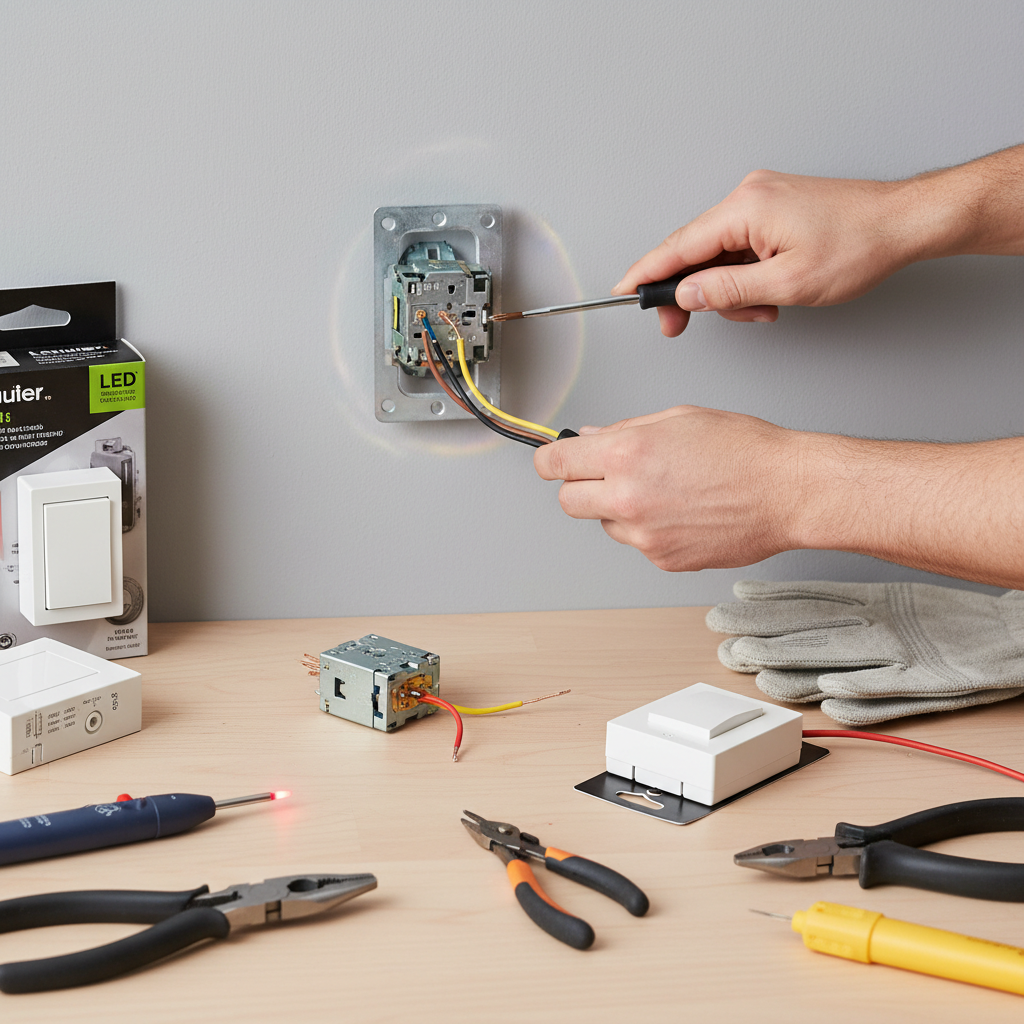
Understanding Why Your Dimmer Switch Buzzes
Before you can fix a buzzing dimmer switch, it’s crucial to understand what causes the noise. The hum or buzz is typically an audible symptom of electrical current struggling or components not interacting correctly. Several factors can contribute to this issue:
- Incompatible Light Bulbs (Especially LEDs): One of the most common culprits today is using LED bulbs with an older, incompatible dimmer switch. Traditional incandescent dimmers are designed to work with resistive loads, whereas LEDs have electronic drivers that react differently to the dimming mechanism, often causing a buzz or flicker. Non-dimmable LEDs will also certainly buzz if connected to a dimmer.
- Loose Wiring Connections: Over time, the screw terminals connecting the wires to the dimmer switch can loosen due to vibrations, temperature changes, or improper initial installation. Loose connections can lead to poor electrical contact, creating resistance and causing a noticeable buzzing sound as the current attempts to flow.
- Overloaded Circuit: Every dimmer switch has a maximum wattage rating it can safely handle. If the total wattage of all the light bulbs connected to that dimmer exceeds its specified limit, the switch will be overworked, leading to overheating and a characteristic buzzing noise.
- Faulty or Aging Dimmer Switch: Like any electrical component, dimmer switches have a lifespan. Internal components can degrade over time, leading to inefficiencies, poor dimming performance, and buzzing. An old, worn-out dimmer switch might simply need to be replaced.
Safety First: Essential Precautions Before You Begin
Attempting any electrical repair requires strict adherence to safety protocols. Neglecting these steps can result in electrical shock, fire, or serious injury. “Safety is paramount in any electrical work. Always verify power is off before touching any wires.”
Here’s how to prioritize your safety:
- Turn Off Power at the Breaker: Locate your home’s main electrical panel and identify the circuit breaker that controls the lighting circuit connected to the buzzing dimmer switch. Flip the breaker to the “OFF” position. It’s also a good practice to tape over the breaker or place a “DO NOT OPERATE” sign to prevent anyone from accidentally turning it back on.
- Verify with a Voltage Tester: After turning off the breaker, always use a non-contact voltage tester to confirm that no power is flowing to the switch or the light fixture. Simply touch the tip of the tester to the wires and terminals inside the switch box. If it beeps or lights up, power is still present, and you need to investigate which breaker controls the circuit.
- Use the Right Tools & Gear: Ensure you have insulated screwdrivers (Phillips and flathead), wire strippers (if needed for replacement), and the non-contact voltage tester. Wearing rubber-soled shoes and avoiding working in damp conditions adds an extra layer of safety.
- When to Call a Pro: If at any point you feel unsure, uncomfortable, or encounter issues beyond simple troubleshooting, stop immediately and call a licensed electrician. Your safety and the integrity of your home’s electrical system are not worth risking.
Step-by-Step Guide: How to Troubleshoot and Fix a Buzzing Dimmer Switch
With safety precautions in place, you can now systematically troubleshoot and address the buzzing.
Step 1: Check Bulb Compatibility and Type
This is often the quickest and easiest fix.
- Are your bulbs dimmable? Inspect the packaging or base of your light bulbs. If they are not explicitly labeled “dimmable,” they will likely buzz or flicker when connected to a dimmer. Replace them with dimmable versions.
- Are they compatible with your dimmer switch? If you’ve recently upgraded to LED bulbs, your old dimmer switch might be the problem. Older dimmers designed for incandescent bulbs are typically “leading edge” dimmers, which can cause buzzing with LEDs. You’ll likely need to replace it with an “LED compatible” or “universal” dimmer, often using “trailing edge” technology, which is better suited for LED drivers. Test by replacing one or all bulbs with known compatible, dimmable LEDs.
|
Our Picks for the Best Living room ceiling light in 2026
As an Amazon Associate I earn from qualifying purchases.
|
||
| Num | Product | Action |
|---|---|---|
| 1 | Modern LED Ceiling Light 7 Rings Dimmable Fixtures with Remote Black Close to Ceiling Light 31.8" 130W 3000K-6500K Flush Mount Ceiling Lamp for Living Room,Bedroom,Kitchen |

|
| 2 | Shine LUEST Modern LED Ceiling Light, Dimmable LED Chandelier Flush Mount Ceiling Lights, Remote Control Acrylic Ring Ceiling Lamp Fixture for Living Room Dining Room Bedroom (White, 8 Rings) |
|
| 3 | MEIXISUE Gold Modern Sputnik Chandelier Ceiling Light Fixtures,6-Lights Industrial Metal Semi Flush Mount Ceiling Light for Bedroom Dining Room Living Room Kitchen Hallway UL Listed |
|
| 4 | Shine LUEST Modern LED Ceiling Light Fixture Black Kitchen Lighting Fixtures Ceiling for Bedroom 31.5" Dimmable 6 Ring Square Ceiling Light for Kitchen with Remote Control for Living Room,Dining Room |
|
| 5 | Modern Ceiling Light, 36.2'' LED Dimmable Acrylic Square 6+1 Rings Ceiling Lights with Remote, Black Flush Mount Ceiling Light Fixture for Low Ceiling Bedroom Living Room Dining Room, 130W |
|
| 6 | 36W Modern LED Ceiling Light Fixture, 19.7Inch Curved Wave Ceiling Lamp with Remote for Bedroom, Kitchen, Hallway, Foyer Library Dining Room Silver 6000K Modern Ceiling Light Fixture |
|
| 7 | RUIYEY Modern Chandelier Ceiling Light Fixture Sputnik Chandeliers Gold and Black Farmhouse Chandelier Over Table 12-Light Height Adjustable Chandeliers for Dining Room, Living Room,Kitchen Island |
|
| 8 | 33" Modern Chandelier Ceiling Light Fixture, 12-Light Sputnik Chandeliers Brushed Gold and Black Mid Century Chandelier Over Table, Height Adjustable Chandeliers for Dining Room Living Room Kitchen |
|
| 9 | Modern LED Ceiling Light for Bedroom 31.5" Black Kitchen Lighting Fixtures Ceiling 3000-6500K Dimmable Square Ceiling Light with Remote Control for Living Room, Dining Room, Kitchen |
|
| 10 | Amico 24 Pack 6 Inch 5CCT Ultra-Thin LED Recessed Ceiling Light with Junction Box, 1050LM Brightness, Dimmable Canless Wafer Downlight, 12W, ETL&FCC |
|
Step 2: Inspect and Tighten Wiring Connections
Loose wires are a common culprit for buzzing.
- Turn off power again: Always double-check that the power to the switch is off at the breaker. Use your voltage tester to confirm.
- Remove the switch plate: Carefully unscrew and remove the wall plate covering the dimmer switch.
- Gently pull the switch from the wall box: The switch is usually held in place by two screws at the top and bottom. Unscrew these, and carefully pull the switch forward, exposing the wires connected to its terminals. Do not disconnect any wires yet.
- Check screw terminals and wire nuts: Examine all wire connections. Are any screw terminals loose? Use your screwdriver to gently tighten any that seem less than snug. If wires are connected with wire nuts, ensure they are twisted on securely and none of the copper wire is exposed outside the nut. Be careful not to overtighten, which can strip screws or damage wires.
- Reinstall the switch and test: Push the dimmer switch gently back into the wall box, secure it with its mounting screws, and reattach the wall plate. Turn the power back on at the breaker and test the dimmer. If the buzzing has stopped, you’ve found the solution.
Step 3: Assess and Address Overloading Issues
An overloaded dimmer is a fire hazard and a source of buzzing.
- Calculate total wattage: Add up the wattage of all bulbs connected to the dimmer switch. For LEDs, use their equivalent incandescent wattage for comparison, but more accurately, use their actual wattage consumption.
- Compare to dimmer rating: Look for a label on the dimmer switch itself (you might need to pull it out slightly, with power off, of course) or check its packaging for its maximum wattage rating.
- Reduce load or upgrade dimmer: If your total bulb wattage exceeds the dimmer’s rating, you have two options:
- Replace some high-wattage bulbs with lower-wattage ones (e.g., swapping a 100W equivalent LED for a 60W equivalent).
- Replace the existing dimmer with a new one that has a higher wattage rating. This is often the more practical long-term solution, especially if you want to maintain your current lighting levels.
Step 4: Consider Replacing the Dimmer Switch
If the previous steps haven’t resolved the buzzing, or if your dimmer is old and shows signs of wear, replacement is the next logical step. “The transition to LED lighting often necessitates an upgrade in dimmer technology. Older dimmers are simply not designed for the low current and unique load characteristics of LEDs.”
- When to replace: Replace if the dimmer is old, consistently hot to the touch, has a visible defect, or if it’s incompatible with your current (or desired) LED lighting setup.
- Choosing the right replacement:
- For LED lights, always choose a dimmer explicitly labeled “LED compatible,” “universal,” or “multi-location LED dimmer.” These are designed to handle the nuances of LED loads and minimize buzzing.
- Match the new dimmer’s wattage rating to your total load, ensuring there’s a little headroom.
- Consider the type of control (toggle, slide, touch, smart home enabled).
- Basic replacement steps (always with power OFF):
- Turn off power at the breaker and verify with a voltage tester.
- Carefully disconnect the wires from the old dimmer, noting which wire goes to which terminal (taking a picture can be helpful).
- Connect the wires to the new dimmer according to the manufacturer’s instructions. Typically, there’s a hot wire, a load wire (to the light), and a ground wire. Some also have a neutral wire.
- Carefully push the new dimmer into the wall box, secure it, and reattach the wall plate.
- Turn power back on and test.
Preventing Future Dimmer Switch Buzzes
Once you’ve resolved the issue, consider these tips to prevent buzzing from recurring:
- Match Components Correctly: Always ensure your dimmer switches are compatible with your light bulbs, especially when using LEDs. Look for “dimmable” bulbs and “LED compatible” dimmers.
- Don’t Overload: Keep track of the total wattage connected to each dimmer and ensure it stays below the switch’s maximum rating.
- Quality Matters: Invest in reputable brands for both dimmer switches and light bulbs. Higher quality components often lead to more reliable and buzz-free operation.
- Professional Installation: If you’re doing major electrical upgrades or are uncertain about any step, hiring a licensed electrician ensures proper and safe installation.
When to Call a Professional Electrician
While many dimmer switch issues are DIY-friendly, certain situations warrant calling a professional electrician:
- Persistent Buzzing: If you’ve tried all the troubleshooting steps and the buzzing continues, there might be a more complex underlying electrical problem, such as an issue with the circuit itself or the light fixture.
- Complex Wiring: If you encounter unfamiliar wiring configurations, three-way or four-way switches, or older, non-standard wiring, it’s best to let a professional handle it.
- Safety Concerns: Any signs of burning smells, flickering lights not related to the dimmer setting, tripped breakers, or excessive heat from the switch should be immediately addressed by an electrician.
- Lack of Confidence: If you’re uncomfortable at any point during the process, or if you simply don’t have the time or tools, calling an expert is always the safest choice.
By understanding the causes and following these safety and troubleshooting steps, you can confidently address a buzzing dimmer switch. Remember, a quiet home is a happy home!
Frequently Asked Questions
Can a buzzing dimmer switch be dangerous?
While a minor buzz due to incompatibility might not be immediately dangerous, a loud, consistent buzz often indicates an electrical issue like loose wiring or an overloaded circuit. These can generate heat and potentially lead to arcing or fire if left unaddressed. It’s always best to investigate and fix a buzzing dimmer promptly to ensure safety.
Why do LED lights buzz with a dimmer?
LED lights buzz with a dimmer primarily due to incompatibility. Older dimmers designed for incandescent bulbs chop the electrical current in a way that LEDs’ electronic drivers don’t handle well, causing them to vibrate and emit a buzzing sound. Using non-dimmable LEDs or an overloaded circuit can also contribute to the noise.
How long do dimmer switches last?
The lifespan of a dimmer switch can vary widely, typically ranging from 5 to 15 years. Factors like usage frequency, the quality of the switch, the load it handles, and proper installation all play a role. Signs of an aging dimmer include inconsistent dimming, overheating, or persistent buzzing that isn’t resolved by other troubleshooting steps.
What kind of dimmer do I need for LED lights?
For LED lights, you need a dimmer specifically labeled “LED compatible,” “universal,” or sometimes “trailing edge.” These dimmers are designed to handle the low wattage and electronic characteristics of LEDs, preventing buzzing, flickering, and ensuring smooth dimming performance. Always check the dimmer’s specifications to match it with your bulbs’ requirements.
Can I fix a buzzing dimmer without turning off the power?
Absolutely not. You must always turn off the power to the circuit at the main electrical panel before attempting any inspection, tightening of wires, or replacement of a dimmer switch. Working with live electricity is extremely dangerous and can result in severe injury or death by electric shock. Always confirm power is off with a voltage tester.