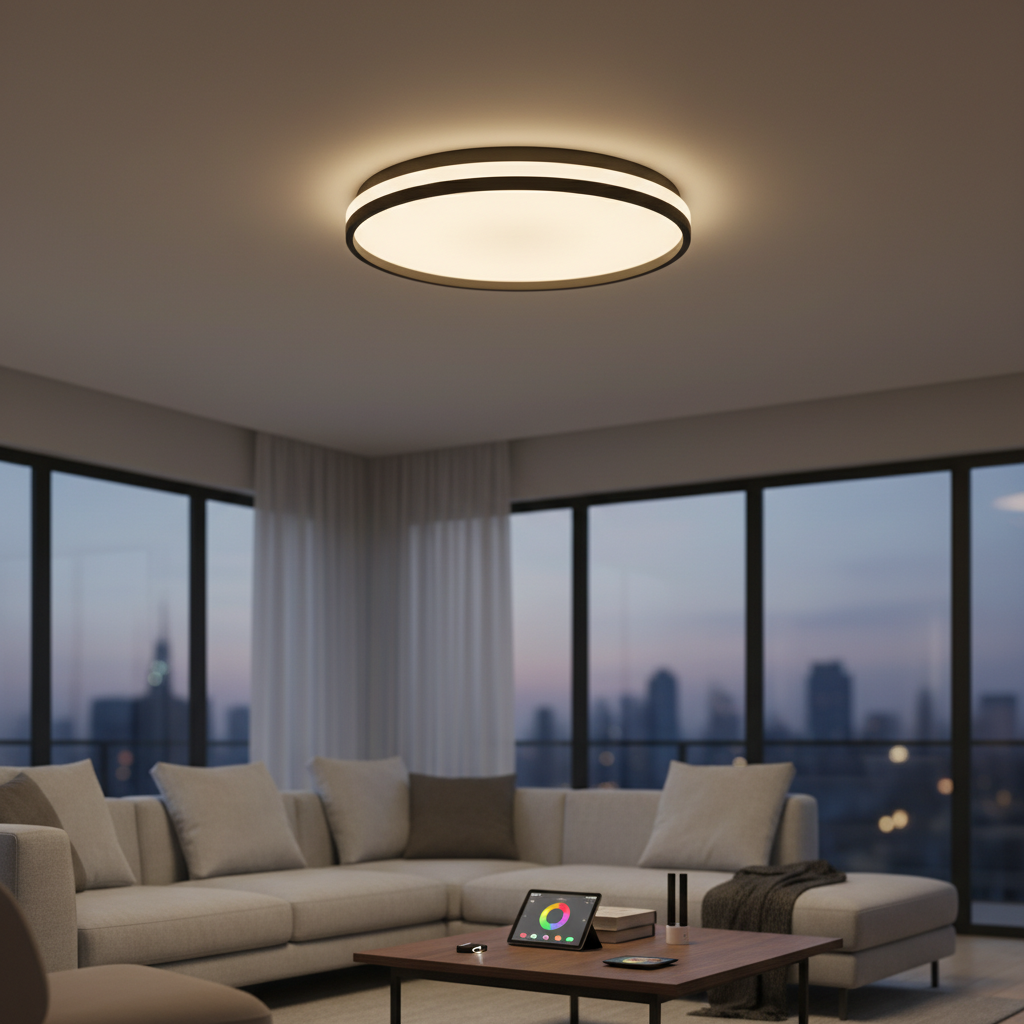
Vaulted and sloped ceilings are architectural marvels, adding dramatic flair and a sense of expansive space to any room. Yet, their unique angles and varying heights often present distinct challenges when it comes to lighting. Achieving a balanced, aesthetically pleasing, and functional illumination requires a thoughtful approach, moving beyond conventional flat-ceiling solutions. This comprehensive guide, informed by over a decade of expertise in lighting design, will explore optimal lighting strategies and fixtures to transform these dynamic spaces into beautifully lit, inviting havens.
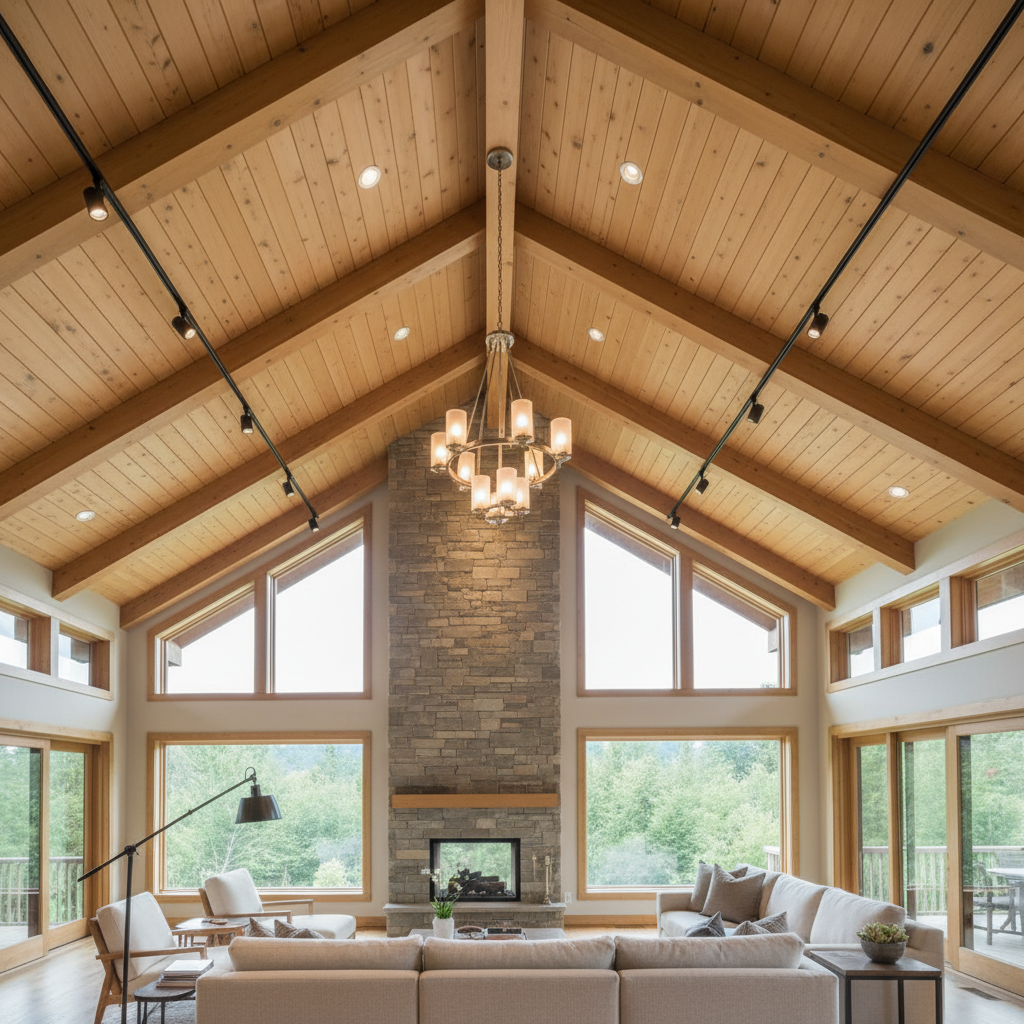
Understanding the Unique Challenges of Vaulted and Sloped Ceilings
The inherent beauty of a vaulted or sloped ceiling lies in its deviation from the ordinary, but this very uniqueness can complicate lighting design. Unlike flat ceilings, these architectural features introduce a set of considerations that can lead to uneven light distribution, uncomfortable glare, or unflattering shadows if not addressed correctly.
Architectural diversity is a primary factor. Whether you have a single, gentle pitch, multi-level sections, intriguing dormers, or light-enhancing skylights, each element influences where and how light should be cast. The varying angles and impressive height of these ceilings mean that traditional fixtures might direct light in unintended ways, leaving vast upper sections dark while over-illuminating lower areas. Furthermore, the construction of sloped roofs often leaves little or no “void depth” behind the ceiling surface, making the installation of standard recessed lighting nearly impossible due to the space required for housing and insulation. Considerations like sightlines and symmetry are also crucial; a fixture that appears centered on the floor plan might look visually off-balance when mounted on an angled ceiling. Lastly, while skylights are magnificent for natural daylight, they can become stark, dark voids at night, posing a visual contrast challenge and limiting prime fixture placement.
Types of Lights for Vaulted and Sloped Ceilings
Navigating the complexities of angled ceilings means choosing fixtures specifically adapted for these spaces or employing clever installation techniques. From integrated designs to statement pieces, the right light can enhance both form and function.
Recessed Lighting: The Seamless Solution
|
Our Picks for the Best Living room ceiling light in 2026
As an Amazon Associate I earn from qualifying purchases.
|
||
| Num | Product | Action |
|---|---|---|
| 1 | 33" Modern Chandelier Ceiling Light Fixture, 12-Light Sputnik Chandeliers Brushed Gold and Black Mid Century Chandelier Over Table, Height Adjustable Chandeliers for Dining Room Living Room Kitchen |

|
| 2 | Modern LED Ceiling Light 7 Rings Dimmable Fixtures with Remote Black Close to Ceiling Light 31.8" 130W 3000K-6500K Flush Mount Ceiling Lamp for Living Room,Bedroom,Kitchen |
|
| 3 | Shine LUEST Modern LED Ceiling Light, Dimmable LED Chandelier Flush Mount Ceiling Lights, Remote Control Acrylic Ring Ceiling Lamp Fixture for Living Room Dining Room Bedroom (White, 8 Rings) |
|
| 4 | Modern Ceiling Light, 36.2'' LED Dimmable Acrylic Square 6+1 Rings Ceiling Lights with Remote, Black Flush Mount Ceiling Light Fixture for Low Ceiling Bedroom Living Room Dining Room, 130W |
|
| 5 | Amico 24 Pack 6 Inch 5CCT Ultra-Thin LED Recessed Ceiling Light with Junction Box, 1050LM Brightness, Dimmable Canless Wafer Downlight, 12W, ETL&FCC |
|
| 6 | MEIXISUE Gold Modern Sputnik Chandelier Ceiling Light Fixtures,6-Lights Industrial Metal Semi Flush Mount Ceiling Light for Bedroom Dining Room Living Room Kitchen Hallway UL Listed |
|
| 7 | Modern LED Ceiling Light for Bedroom 31.5" Black Kitchen Lighting Fixtures Ceiling 3000-6500K Dimmable Square Ceiling Light with Remote Control for Living Room, Dining Room, Kitchen |
|
| 8 | RUIYEY Modern Chandelier Ceiling Light Fixture Sputnik Chandeliers Gold and Black Farmhouse Chandelier Over Table 12-Light Height Adjustable Chandeliers for Dining Room, Living Room,Kitchen Island |
|
| 9 | 36W Modern LED Ceiling Light Fixture, 19.7Inch Curved Wave Ceiling Lamp with Remote for Bedroom, Kitchen, Hallway, Foyer Library Dining Room Silver 6000K Modern Ceiling Light Fixture |
|
| 10 | Shine LUEST Modern LED Ceiling Light Fixture Black Kitchen Lighting Fixtures Ceiling for Bedroom 31.5" Dimmable 6 Ring Square Ceiling Light for Kitchen with Remote Control for Living Room,Dining Room |
|
Recessed lighting, often called can lights or pot lights, offers a sleek, integrated look, blending seamlessly into the ceiling. For vaulted or sloped ceilings, however, standard downlights are insufficient as they would shine light at an angle, creating uneven illumination. The key lies in selecting specialized adjustable recessed lights, commonly known as gimbal or eyeball trims. These fixtures allow you to pivot and direct the light beam precisely downwards, ensuring proper light distribution and minimizing glare. They also require specific “sloped ceiling” housing cans designed to accommodate the angle of your ceiling, allowing the light to hang straight. While installation can be more complex than with flat ceilings, demanding careful measurement of the slope and sufficient ceiling void depth, the result is a clean, modern aesthetic that provides excellent general lighting without visual obstruction. For optimal effect, lights are typically spaced 4 to 6 feet apart and positioned about 1.5 times the ceiling height from the walls, creating a soft wash of light.
Pendant Lights: Artistic Focal Points
Pendant lights are suspended fixtures that descend from the ceiling, offering both focused illumination and significant decorative impact. For sloped ceilings, single pendants with flexible cables or chains are often the simplest solution, as gravity naturally allows them to hang vertically. However, if your chosen pendant features a rigid rod suspension or if you plan to install multiple pendants in a staggered arrangement down a slope, specialized hardware is necessary. A “hang straight” or sloped-ceiling adapter ensures that the pendant rod drops straight down, preventing kinks and stress on the electrical components while maintaining a professional appearance.
Pendants are excellent for defining zones, such as over a kitchen island, dining table, or as a welcoming feature in an entryway. When hanging, ensure the bottom of the fixture is approximately 7 feet from the floor for standard 8-foot ceilings, adjusting by decreasing the drop by 3 inches for every foot of ceiling height above 8 feet. This critical adjustment prevents the fixture from feeling too high and lost in the expansive space, or too low and obstructing views. Maintain at least 3 feet of clearance from walls to avoid harsh shadows, and consider staggering multiple pendants at varying heights to visually fill vertical space along a slope.
Track Lighting: Flexible and Directional
Track lighting is a highly versatile option that provides immense flexibility in directing light. Comprising multiple individual light heads mounted on a linear track, it allows you to precisely aim illumination to highlight architectural features, artwork, or specific task areas. Track systems can be directly mounted onto a sloped ceiling, following its angle, or suspended from it, creating a level plane for the light heads.
This type of lighting is particularly effective for accentuating the unique lines of a vaulted ceiling or providing targeted task lighting where general illumination might fall short. Modern magnetic track systems offer even greater adaptability, allowing for easy repositioning and addition or removal of light fixtures. While track lighting can complement recessed fixtures beautifully by providing a layer of accent lighting, it typically serves as a supplementary solution rather than the primary source of ambient light.
Chandeliers: Grandeur and Statement
For truly grand vaulted spaces, a chandelier can serve as a magnificent focal point, exuding luxury and elegance. These large, often ornate fixtures provide substantial ambient light and draw the eye upwards, emphasizing the ceiling’s impressive height. Similar to pendant lights, the correct hanging height is paramount. A chandelier hung too high loses its visual impact, appearing dwarfed by the expansive space, while one hung too low can disrupt circulation or obstruct views.
As a general guideline for vaulted ceilings, aim to position the bottom of the chandelier lower than you would in a room with a standard 8-foot ceiling, usually around 7 feet from the floor, and adjust down by approximately 3 inches for every foot of ceiling height above 8 feet. This ensures the fixture fills the vertical volume gracefully. Given their size and weight, chandeliers require robust structural support and may necessitate specialized mounting hardware for sloped applications. Choosing a chandelier proportional to the room’s volume and architectural style is key to creating a harmonious and impactful design.
Wall Sconces and Uplighters: Layered Illumination
Beyond ceiling-mounted fixtures, wall sconces and uplighters play a crucial role in creating a layered and inviting lighting scheme for rooms with vaulted ceilings. Wall sconces, mounted directly on vertical surfaces, can provide ambient light, reduce harsh shadows, and add warmth to the lower and mid-sections of a tall room, preventing a “bottom-heavy” lighting effect. When selecting sconces, choose options with a scale appropriate to the expansive walls, as overly small fixtures can get lost in the vastness.
Uplighters, specifically, direct light upwards onto the sloped ceiling itself. This technique is incredibly effective at revealing the architectural lines of the vault, washing the ceiling in a soft glow that visually lifts the room and helps to balance the vast vertical space. They are particularly useful for mitigating the “dark void” effect created by skylights at night, softly illuminating the upper reaches of the room and restoring visual balance.
Ceiling Fans with Lights: Comfort and Illumination
In larger rooms with vaulted or sloped ceilings, combining a ceiling fan with integrated lighting offers a practical dual-purpose solution for both air circulation and illumination. However, standard flush-mount ceiling fans are typically unsuitable for angled ceilings. Instead, look for models designed for sloped ceilings, which come with a downrod and a sloped ceiling adapter. The downrod ensures the fan blades are positioned sufficiently far from the ceiling to circulate air effectively, while the adapter allows the fan canopy to hang level, even if the mounting surface is angled.
When installing a ceiling fan on a vaulted ceiling, it’s essential to select an appropriate downrod length, often longer for higher ceilings, to bring the blades to an optimal operating height. Mount the fan at least 18 inches from the peak of the ceiling and also at least 18 inches from the closest wall to prevent damage and ensure efficient airflow. Many modern ceiling fans come with energy-efficient LED light kits and smart home compatibility, offering convenience and cost savings.
Factors to Consider When Choosing Lights for Vaulted and Sloped Ceilings
Selecting the ideal lighting for your unique space involves more than just picking a pretty fixture. A holistic approach ensures your lighting is both beautiful and functional.
- Room Size and Ceiling Height: The sheer volume of a vaulted room dictates the scale and number of fixtures needed. Taller ceilings often benefit from larger fixtures and a multi-level lighting strategy to avoid a “cave effect” where light doesn’t reach the upper portions of the room.
- Architectural Style: Your lighting choices should complement the existing aesthetic of your home. A rustic barn conversion might suit exposed track lighting or a grand iron chandelier, while a minimalist modern home would benefit from sleek recessed lights or sculptural pendants.
- Lighting Layers (Ambient, Task, Accent): A well-lit vaulted space employs a layered approach. Ambient lighting (e.g., recessed lights, chandeliers) provides overall illumination. Task lighting (e.g., pendants over an island) focuses light for specific activities. Accent lighting (e.g., track lights, wall sconces, uplighters) highlights architectural features, artwork, or creates dramatic effects.
- Energy Efficiency: With potentially more fixtures and higher wattage needed to illuminate large volumes, choosing energy-efficient options is paramount. LED bulbs and integrated LED fixtures are highly recommended for their longevity, lower energy consumption, and reduced heat output.
- Installation Feasibility: Always assess the structural support and void depth behind your sloped ceiling. Complex installations, especially for recessed lighting or heavy chandeliers, may require professional electricians to ensure safety and proper functionality.
- Glare and Shadow Control: Due to the angles, vaulted ceilings are prone to glare and uneven shadows. Adjustable fixtures, strategic placement, and uplighting are crucial for directing light effectively and softening contrasts.
Comparison Table: Lighting Solutions for Vaulted and Sloped Ceilings
| Light Type | Pros | Cons | Best For | Installation Considerations |
|---|---|---|---|---|
| Recessed Lighting | Clean, minimalist look; saves space; excellent general illumination. | Requires special housing/trim; challenging with shallow ceiling voids. | Modern aesthetics, ambient lighting in living areas. | Requires adjustable (gimbal/eyeball) trims and specific “sloped ceiling” housing cans. Needs sufficient void depth. |
| Pendant Lights | High aesthetic appeal; provides focused task lighting; creates focal points. | Can obstruct views if too low; requires careful height adjustment. | Dining tables, kitchen islands, entryways, stairwells. | Flexible cable/chain for natural hang; “hang straight” adapters for rigid rods. Careful calculation of drop length for desired height and clearance from floor/surfaces. |
| Track Lighting | Highly flexible and directional; accentuates features or artwork. | Can appear industrial; generally complements rather than replaces primary lighting. | Art displays, hallways, flexible task or accent lighting. | Can be mounted directly on slope or suspended. Consider magnetic track systems for modern aesthetics and ease of adjustment. |
| Chandeliers | Grand, luxurious focal point; provides ample ambient light. | Expensive; requires high ceilings and significant vertical clearance. | Formal living rooms, grand entryways. | Requires robust structural support. Hanging height crucial (typically lower than standard rooms to fill vertical space). |
| Wall Sconces/Uplighters | Balances light, reduces shadows; highlights architectural details; adds warmth. | Requires strategic placement to avoid glare at eye level. | Accent walls, hallways, to balance light in tall rooms. | Choose scale appropriate for the wall height. Position at eye level or higher in the middle-third of walls for ambient fill; uplighters can be installed lower to wash the ceiling. |
| Ceiling Fans with Lights | Dual functionality (air circulation & illumination); energy-efficient options. | Requires downrod and adapter; can be complex to install at peak of slope. | Living rooms, bedrooms, large open spaces. | Requires a long downrod and a sloped ceiling adapter. Blades must be at least 18 inches from the ceiling and 18 inches from the peak/walls for optimal airflow. |
Expert Tips for Optimal Lighting in Vaulted and Sloped Ceilings
Leveraging decades of experience, here are crucial insights to guide your lighting decisions for these magnificent architectural features:
- Layer Your Lighting Strategically: Never rely on a single light source. Combine ambient lighting for overall brightness, task lighting for functionality, and accent lighting to highlight architectural details or artwork. This creates depth, flexibility, and a more inviting atmosphere.
- Understand Your Ceiling’s Specifics: Before purchasing any fixture, precisely measure your ceiling’s angles, identify structural beams, and confirm the depth of any ceiling voids. This critical step prevents costly mistakes and ensures compatibility with your chosen lighting solutions.
- Embrace Adjustable Fixtures: Prioritize lights with directional capabilities, such as gimbal or eyeball trim recessed lights and adjustable track heads. This flexibility allows you to fine-tune the light direction, preventing dark spots and unwanted glare caused by the ceiling’s slope.
- Mind the Scale of Your Fixtures: In expansive vaulted spaces, overly small light fixtures can appear insignificant and fail to adequately illuminate the area. Choose pieces that are proportional to the room’s volume and height to ensure they make the desired impact and effectively distribute light.
- Address the “Skylight Void”: While skylights are a boon for natural light, they can become dark, cavernous voids at night. Mitigate this by incorporating uplighting around the slopes or positioning wall lights opposite the skylights to restore visual balance and prevent a sense of lost height. Pendants with downward-focused light can also ground the space below a skylight.
- Consider Custom Solutions for Unique Spaces: Highly unique or particularly challenging vaulted and sloped ceilings may benefit from customized suspension lengths for pendants or bespoke fittings. Don’t hesitate to consult with lighting specialists who can tailor solutions to your specific architectural needs.
- Test and Adjust Lighting: The true effect of lighting is best observed in person. If possible, test different light temperatures (warm, neutral, cool) and intensity levels. Evaluate the lighting at various times of day and night to ensure it meets your functional and aesthetic goals under all conditions.
Conclusion
Lighting vaulted and sloped ceilings demands more than a one-size-fits-all approach. It’s an opportunity to celebrate the unique architecture of your home, transforming potentially challenging spaces into beautifully illuminated environments. By understanding the specific considerations, exploring the diverse range of available fixtures—from the subtle elegance of recessed lighting to the grandeur of chandeliers and the practicality of ceiling fans with lights—and thoughtfully layering your illumination, you can achieve a truly stunning outcome. The right lights for vaulted and sloped ceilings will not only enhance functionality but also elevate the entire ambiance and aesthetic appeal of your home.
How will you transform your vaulted space into a beacon of light and style, reflecting your unique taste and brightening every corner?
Câu Hỏi Thường Gặp
What is the best type of recessed light for sloped ceilings?
Adjustable LED recessed lights, often referred to as gimbal or eyeball trims, are ideal. These fixtures allow you to pivot and direct the light beam precisely where needed, ensuring effective illumination and preventing light from shining awkwardly into the room.
How far apart should recessed lights be on a sloped ceiling?
For optimal and even illumination on a sloped ceiling, recessed lights should typically be spaced approximately 4 to 6 feet apart. Additionally, placing them about 1.5 times the ceiling height from the walls can create a pleasant and consistent wash of light across the space.
Can I install a standard ceiling fan on a vaulted ceiling?
No, standard flush-mount ceiling fans are generally not suitable for vaulted or sloped ceilings. You will need a ceiling fan designed for sloped ceilings, which typically includes a longer downrod and a specialized sloped ceiling adapter to ensure the fan hangs level and operates safely and efficiently.
How do I hang pendant lights on a very high, sloped ceiling?
To hang pendant lights effectively on a high, sloped ceiling, opt for pendants with flexible cables or chains, or use a “hang straight” adapter for rigid rod fixtures. Adjust the cable length so the bottom of the pendant is approximately 7 feet from the floor, adding about 3 inches of drop for every foot of ceiling height above 8 feet.
What are some common challenges when lighting a room with a sloped ceiling?
Common challenges include achieving uniform light distribution, managing potential glare due to angles, finding fixtures compatible with limited ceiling void depths, and ensuring pendants or chandeliers hang straight and at the appropriate height without interfering with the slope or architectural elements like skylights.
Should I use only one type of light for a vaulted ceiling?
A multi-layered lighting approach is highly recommended for vaulted ceilings. Combining ambient, task, and accent lighting (e.g., recessed lights for general illumination, pendants for task areas, and wall sconces or track lights for highlighting features) provides comprehensive, flexible, and aesthetically rich illumination.
Are LED lights a good choice for vaulted ceilings?
Absolutely. LED lights are an excellent choice for vaulted ceilings due to their superior energy efficiency, significantly longer lifespan, and the wide range of available color temperatures. Many adjustable recessed lights, track lights, and integrated fixtures suitable for these ceilings now utilize advanced LED technology.